 |
|||||||||||
|
|||||||||||
 |
|||||||||||
|



 |
 |
 |

 Keys & Other Islands Keys & Other Islands |
|
| Favorite Places | Wildlife | Activities and Interests | |
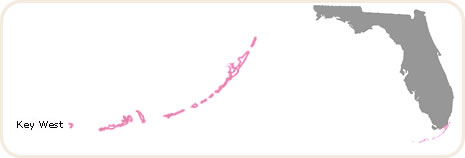
Just south of Miami, the Florida Keys trail away to the southwest, ending at Key West. The overseas highway – a section of US1 – begins at Key Largo and runs for 180 km (114 miles) over 42 bridges and causeways to Key West. The Dry Tortugas, considered the highlight of any birding trip to south Florida, are about 110 km (70 miles) west of Key West. Geologically, the Keys consist of a shallow layer of sand over small patches of ancient coral reef; most of the islands rise only a few meters above the ocean. All fresh water must be piped in or collected from rainfall. The Dry Tortugas National Park relies on fresh water solely from a rain catchment system and a small desalinization plant. Coral reefs extend along the east side of the Keys, from Biscayne National Park, through John Pennecamp Coral Reef State Park and out to the Dry Tortugas. Winter is the peak tourist season in the Keys and the parks and reefs are usually very crowded. The area is slightly less crowded in early fall and late spring. Before starting out for Key West, birders should call the Rare Bird Alert hotline for the Lower Keys (305) 294-3438.
|
|
| Favorite Places | |
|
|
| Wildlife | |
|
|
| Activities and Interests | |
|
|
| Tips | |
notes and suggestions
|
|
• Live weather radar 
• About Florida weather • Map & Key to Regions |
Wildlife of Florida 2011
Fiona Sunquist
Download $19.99

Wildlife of Florida: Lizards
Fiona Sunquist
Download $2.49
gator/crocs | birds | mammals | snakes | turtles | frogs/toads | lizards | sharks
Wildlife | Favorite Activities | My Destinations | about us | resources | site map | home
 web site development by Creative Communications